My thesis investigated how machine learning can predict antibiotic resistance in
E. coli directly from its genome. I focused on
Ciprofloxacin (CIP) — a critical fluoroquinolone antibiotic with
rising resistance globally — and built an end-to-end ML pipeline on
588 clinical E. coli isolates from three
published studies.
The work compared two genomic feature representations derived from the same
isolates: a gene presence/absence matrix (capturing horizontally
acquired resistance) and a
single-nucleotide polymorphism (SNP) matrix (capturing
chromosomal mutations). I benchmarked five classical machine learning models
against a retrieval-augmented deep learning model (TabR) on both
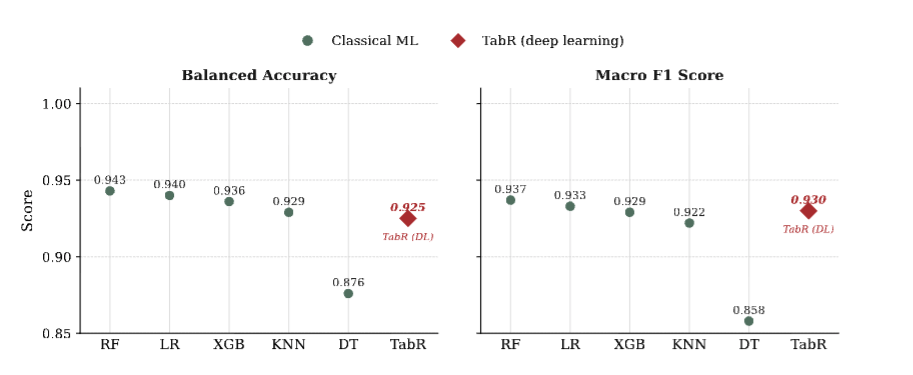
representations. Random Forest gave the best balanced accuracy at
0.943, and XGBoost the best ROC-AUC at
0.989, on a held-out test set.
The Problem
Antibiotic resistance causes more than
1 million deaths each year worldwide.
E. coli is one of the most common drug-resistant pathogens, responsible
for urinary tract and bloodstream infections. Ciprofloxacin — a
key treatment for these infections — is increasingly losing effectiveness as
resistance spreads.
The standard way to test resistance requires growing bacteria in the lab and can
delay appropriate treatment. Whole-genome sequencing offers a faster path: predict
resistance directly from the genome. But an E. coli genome contains
thousands of genes and tens of thousands of mutations, only a small fraction of
which actually drive resistance.
My thesis asked:
which genomic features best predict resistance, and how should they be
represented for machine learning?
Methods
The pipeline turns raw bacterial genomes into resistance
predictions. The work used
588 clinical E. coli isolates
from three published bloodstream-infection studies (England, Norway, and a US
military healthcare network), each labeled Resistant or
Susceptible to Ciprofloxacin based on
EUCAST clinical breakpoints.
Pipeline overview
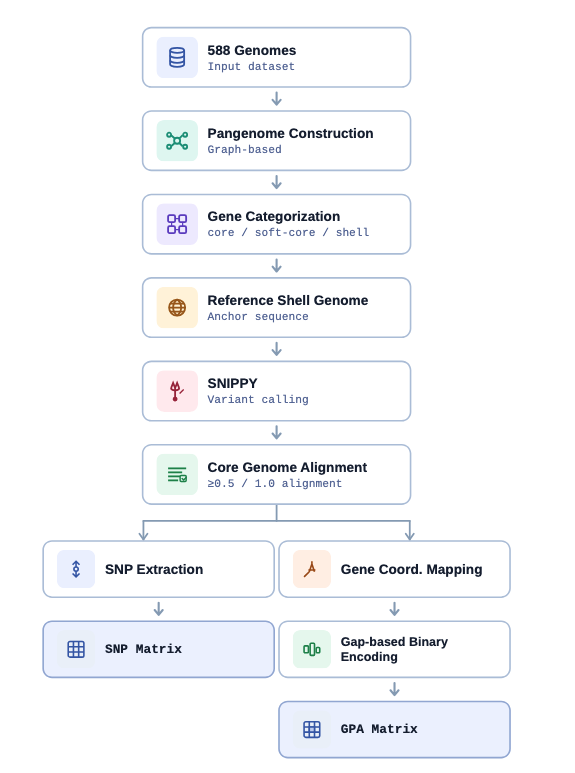
Bioinformatics pipeline: 588 E. coli genomes to SNP and GPA feature
matrices.
Starting from the 588 isolates, a pangenome was
constructed and categorized into core,
soft-core, and shell genes. A reference shell
genome was generated from these categories and used as the alignment anchor for
Snippy variant calling, producing a core genome alignment across
all isolates.
From this single alignment, I derived two genomic feature representations in parallel:
SNP Matrix. Extracted single-nucleotide polymorphism positions
from the alignment, filtered by minor allele frequency
(MAF ≥ 0.05) and gap proportion
(≤ 10%). One-hot encoding multi-allelic positions
produced a 588 × 67,259 feature
matrix, capturing chromosomal mutations.
Gene Presence/Absence Matrix. Designed a coordinate-mapping
algorithm to slice the alignment into per-gene regions using cumulative gene
lengths from the reference. Each gene was encoded as present or absent per
isolate based on gap proportion. After filtering constant features, this yielded
a 588 × 3,625 binary matrix,
capturing horizontally acquired resistance.
Modeling
Feature Selection. Applied Mutual Information for the
SNP dataset (42,178 informative features retained) and
Mutual Information + MultiSURF for the GPA dataset
(2,946 informative genes retained).
Models. Benchmarked five classical models — Decision Tree,
Random Forest, XGBoost, K-Nearest Neighbors, Logistic Regression — against
TabR, a retrieval-augmented deep learning architecture for
tabular data.
Training & Evaluation. Stratified
80/20 train-test split
(470 train, 118 test).
Hyperparameters tuned with Optuna (TPE sampler,
100 trials per model per fold) under
3-fold stratified cross-validation,
optimizing balanced accuracy to account for the mild class imbalance
(53% susceptible vs.
47% resistant).
Key Results
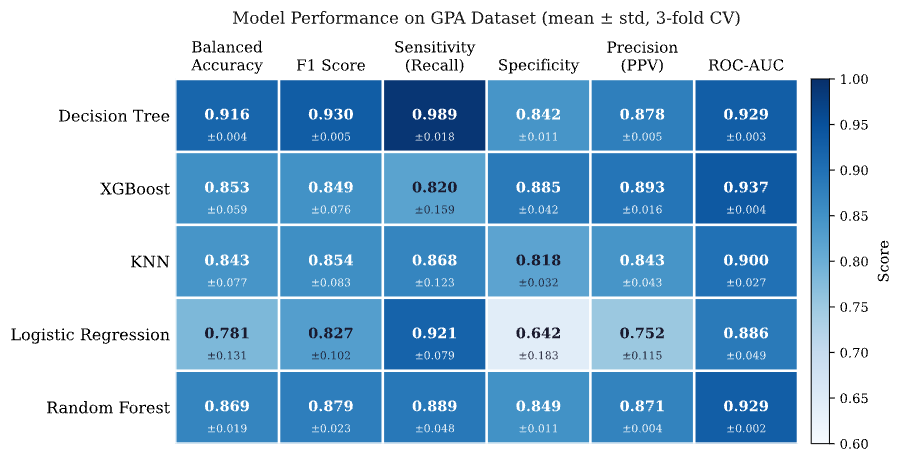
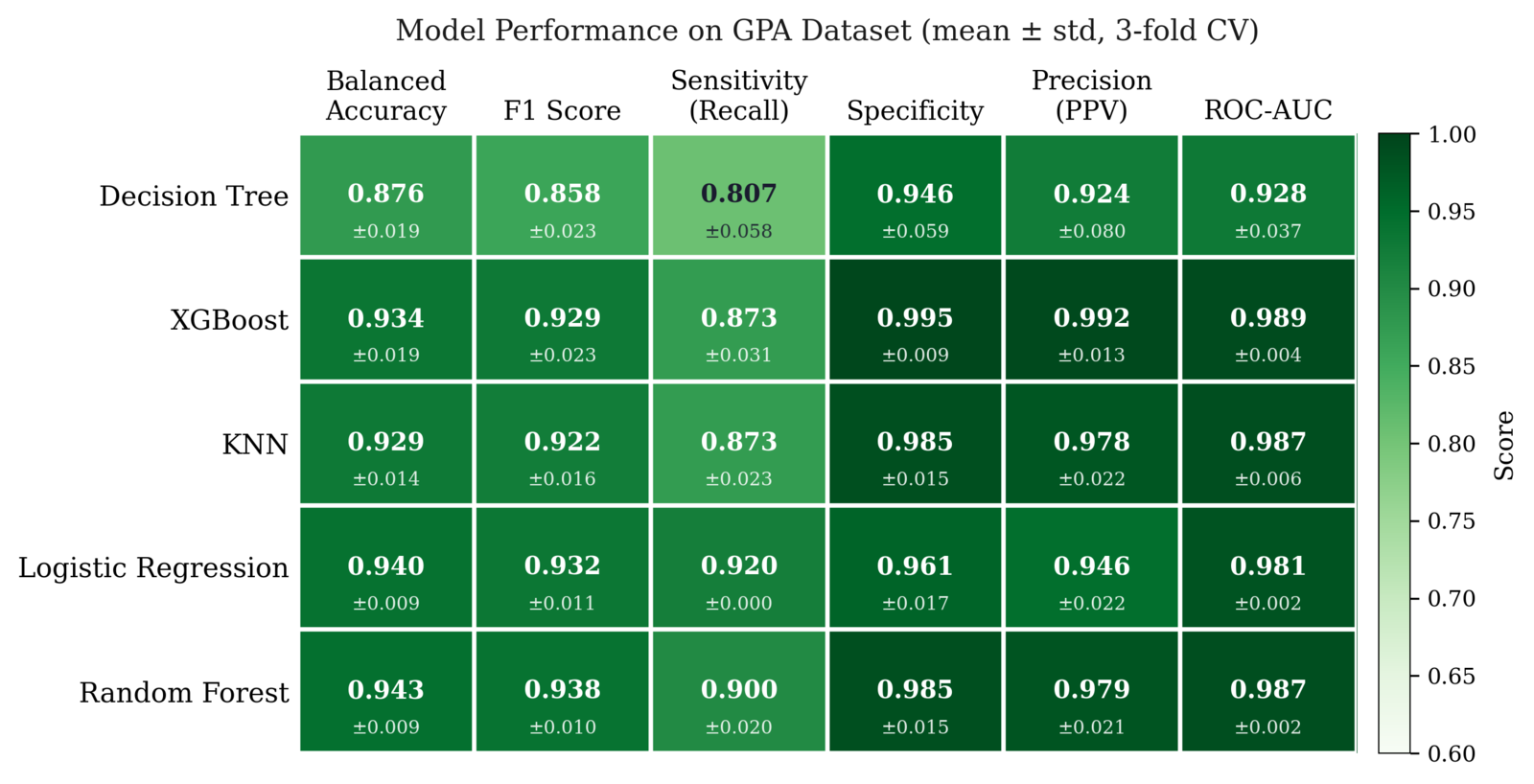
Three findings stood out from the model evaluation, summarized in the figures below.
Gene presence/absence outperformed SNP features
Models trained on the GPA matrix achieved higher and more consistent performance
than those trained on the SNP matrix. Random Forest on GPA features achieved the
best overall result: 0.943 balanced accuracy,
0.94 F1, and 0.987 ROC-AUC
on the held-out test set (n = 118). XGBoost edged it on
ROC-AUC alone, at 0.989.
Model performance heatmap, SNP dataset. Darker = stronger.Model performance heatmap, GPA dataset. Darker = stronger.
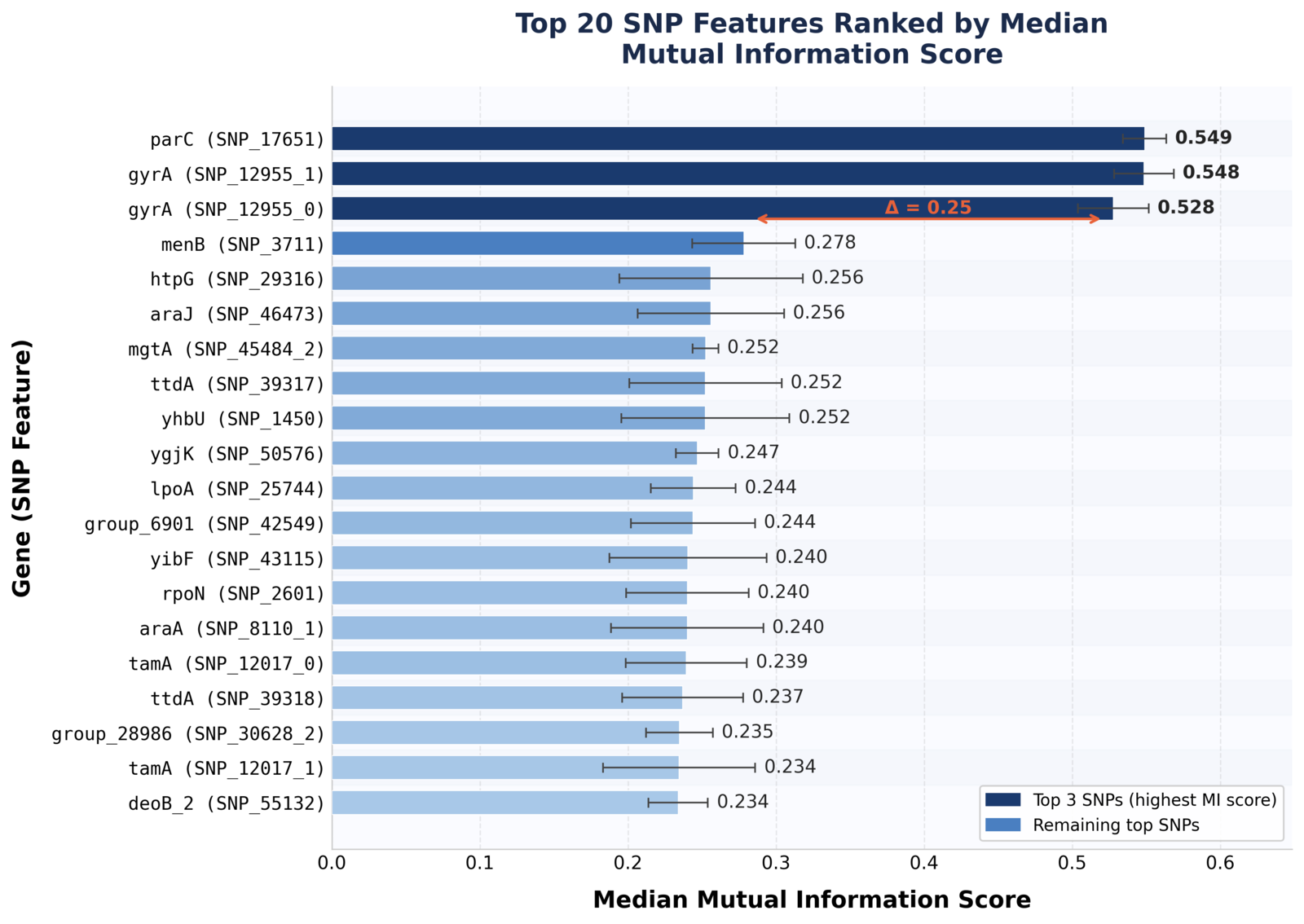
parC and gyrA dominated SNP signal; GPA signal was more distributed
Feature importance analysis revealed strikingly different biological patterns
between the two representations. In the SNP dataset, three variants in
parC and gyrA dominated the
rankings — consistent with the well-established role of chromosomal mutations in
these quinolone resistance-determining regions. The GPA dataset showed a broader,
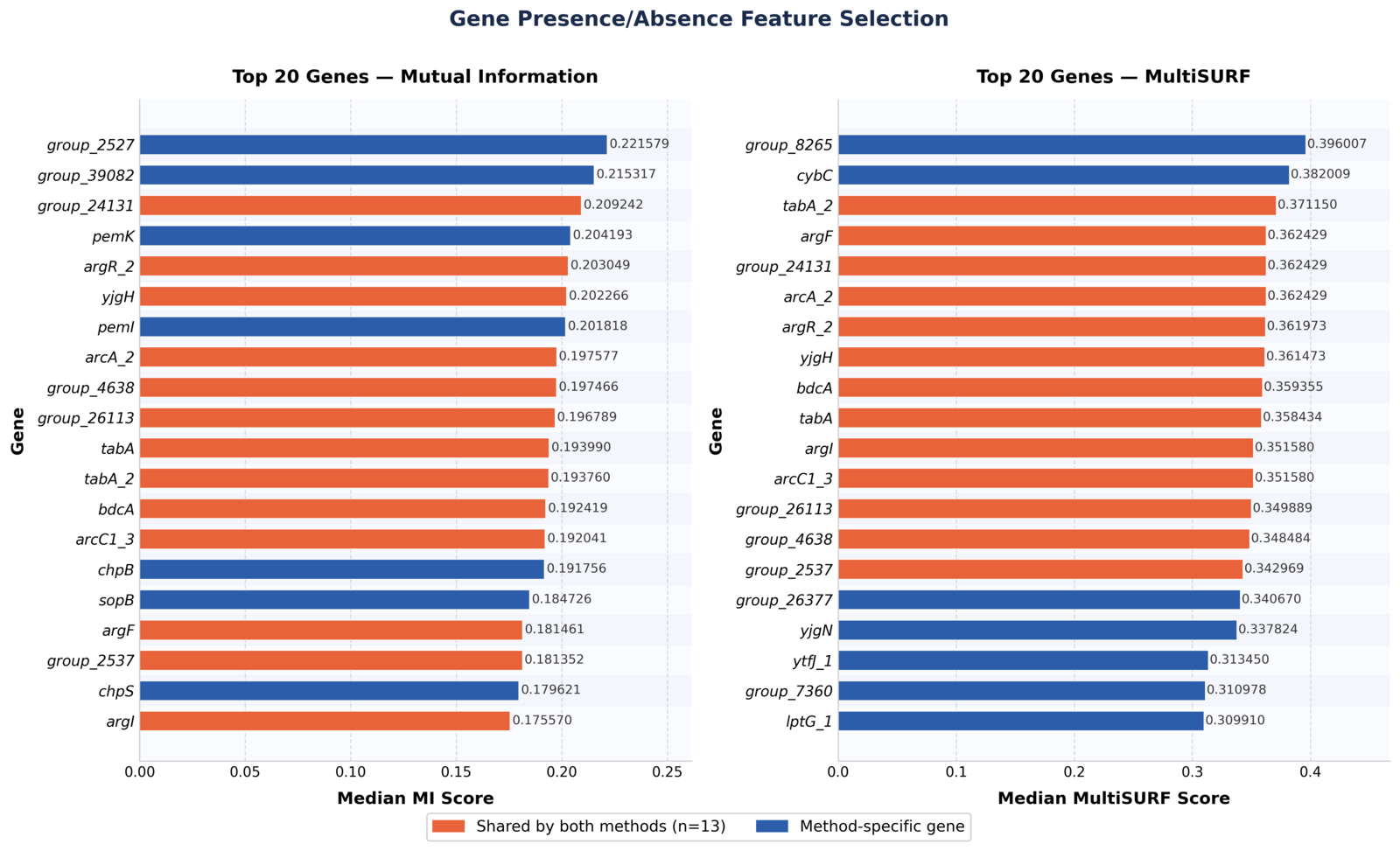
more distributed set of informative genes, with substantial overlap between Mutual
Information and MultiSURF rankings (13 of top
20 shared).
Top 20 SNP features by Mutual Information.Top 20 GPA features by Mutual Information and MultiSURF.
Classical ML outperformed deep learning at this scale
Across both feature representations, classical machine learning models
outperformed the retrieval-augmented deep learning model (TabR) on
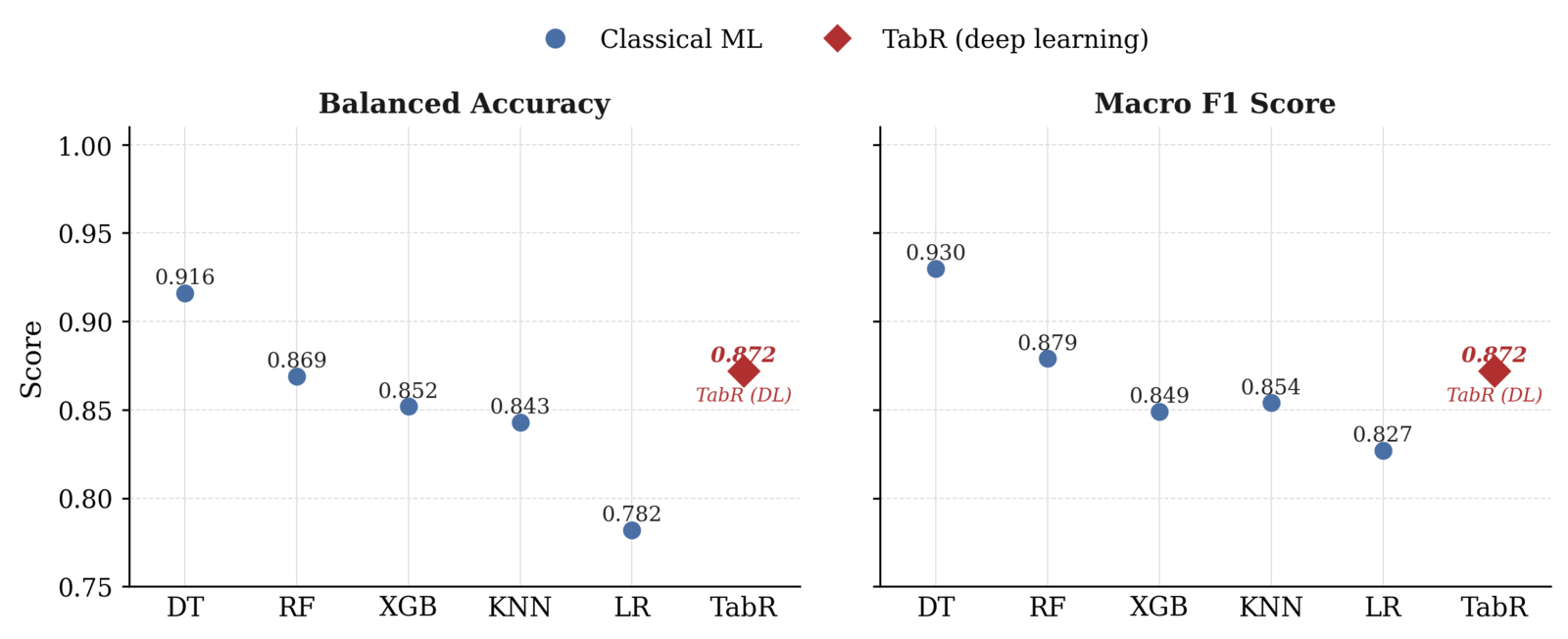
threshold-dependent metrics. On the SNP dataset, Decision Tree beat TabR by
4.4 points in balanced accuracy; on GPA, Random Forest
beat TabR by 1.8 points. ROC-AUC differences were small,
suggesting comparable ranking ability — but at the
588-isolate scale, deep learning provided no measurable
advantage over well-tuned classical methods.
Best classical models vs. TabR, SNP dataset.Best classical models vs. TabR, GPA dataset.
References
Conference Presentations
Pangenome Pipeline for Predicting Antibiotic Resistance in E. coli
SACNAS National Conference, October 2024 — CodeLab, SF State University
Team poster presentation on early-stage pangenome framework development. Contributed
to dataset integration and pangenome construction across three published
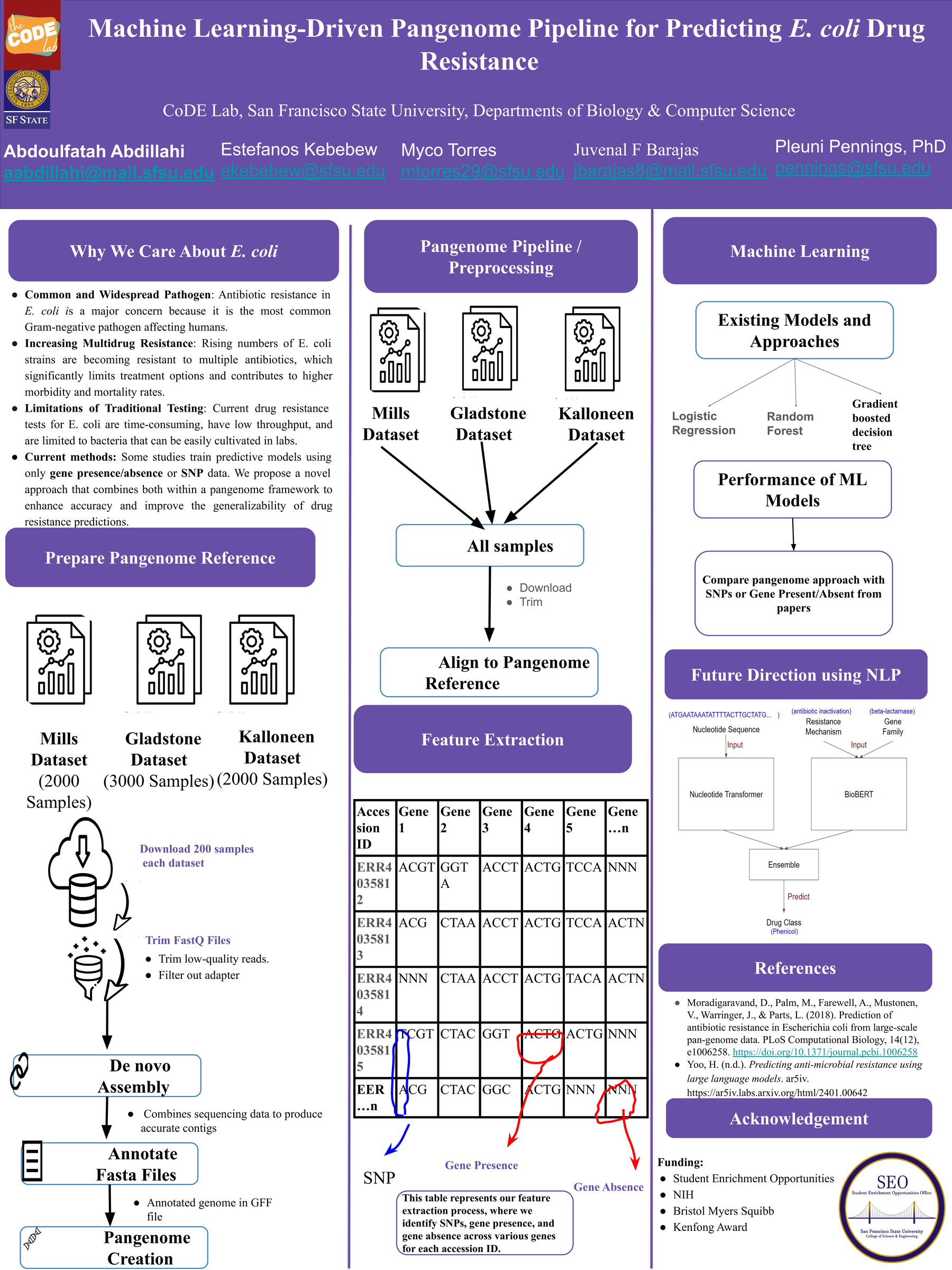
E. coli studies (Mills, Gladstone, Kalloneen). The poster outlined our
planned approach to combining SNP and gene presence/absence features for
cross-dataset antibiotic resistance prediction.
My role: Co-developer of bioinformatics pipeline and poster presenter on behalf of the team.
SACNAS 2024 poster — open at full size.
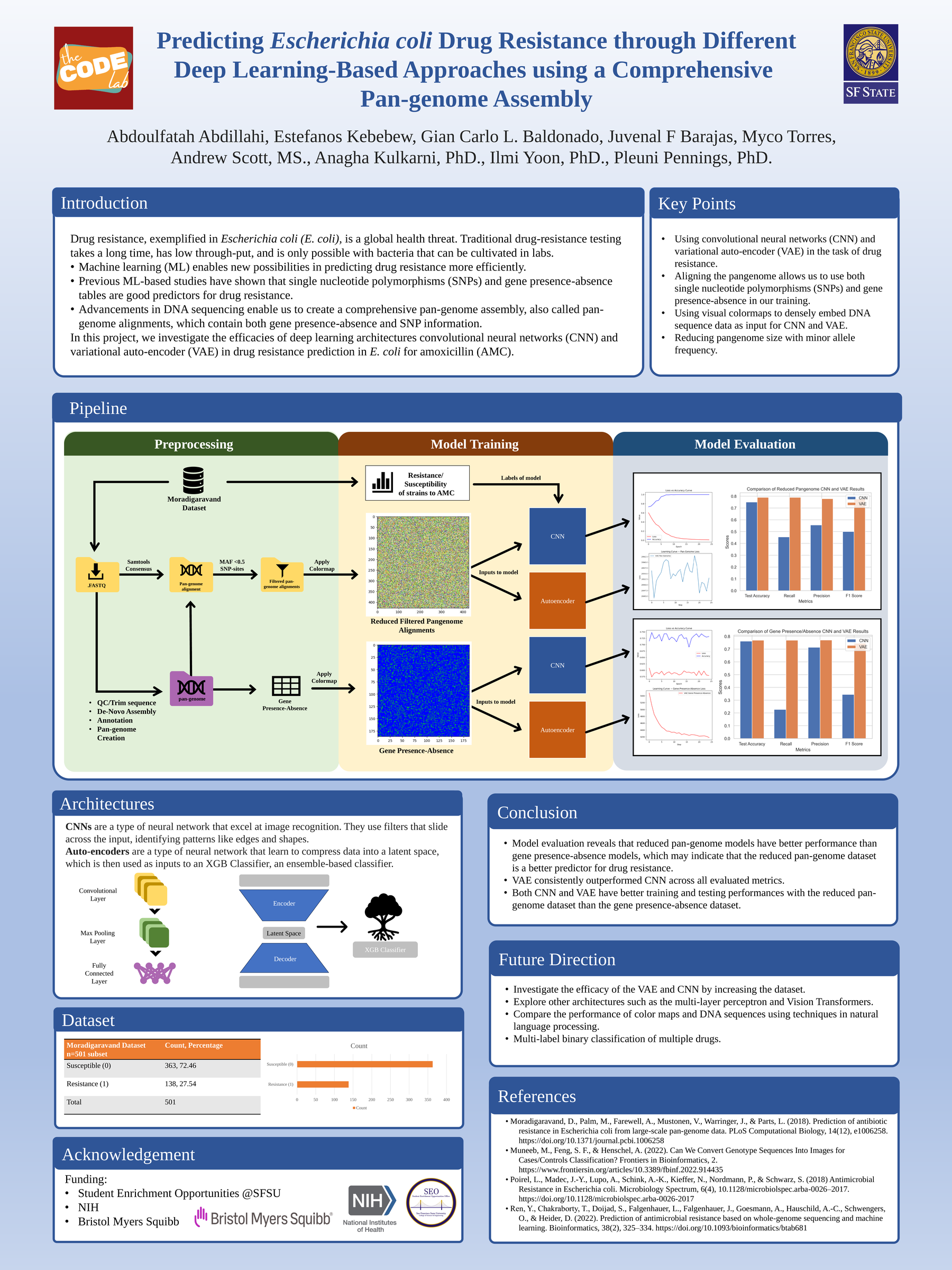
Comparing VAE and CNN Architectures for Bacterial Resistance Prediction
TAGC24 Conference — March 2024, Washington DC
Team poster comparing variational autoencoder (VAE) and convolutional neural network
(CNN) architectures for predicting antibiotic resistance from E. coli
genomes converted into image format. The work benchmarked
501 strains and tested whether image-based deep learning
could match traditional sequence-based approaches.
My role: Contributed to the VAE pipeline alongside a teammate; other teammates implemented the CNN comparison and additional models.
TAGC24 poster — open at full size.
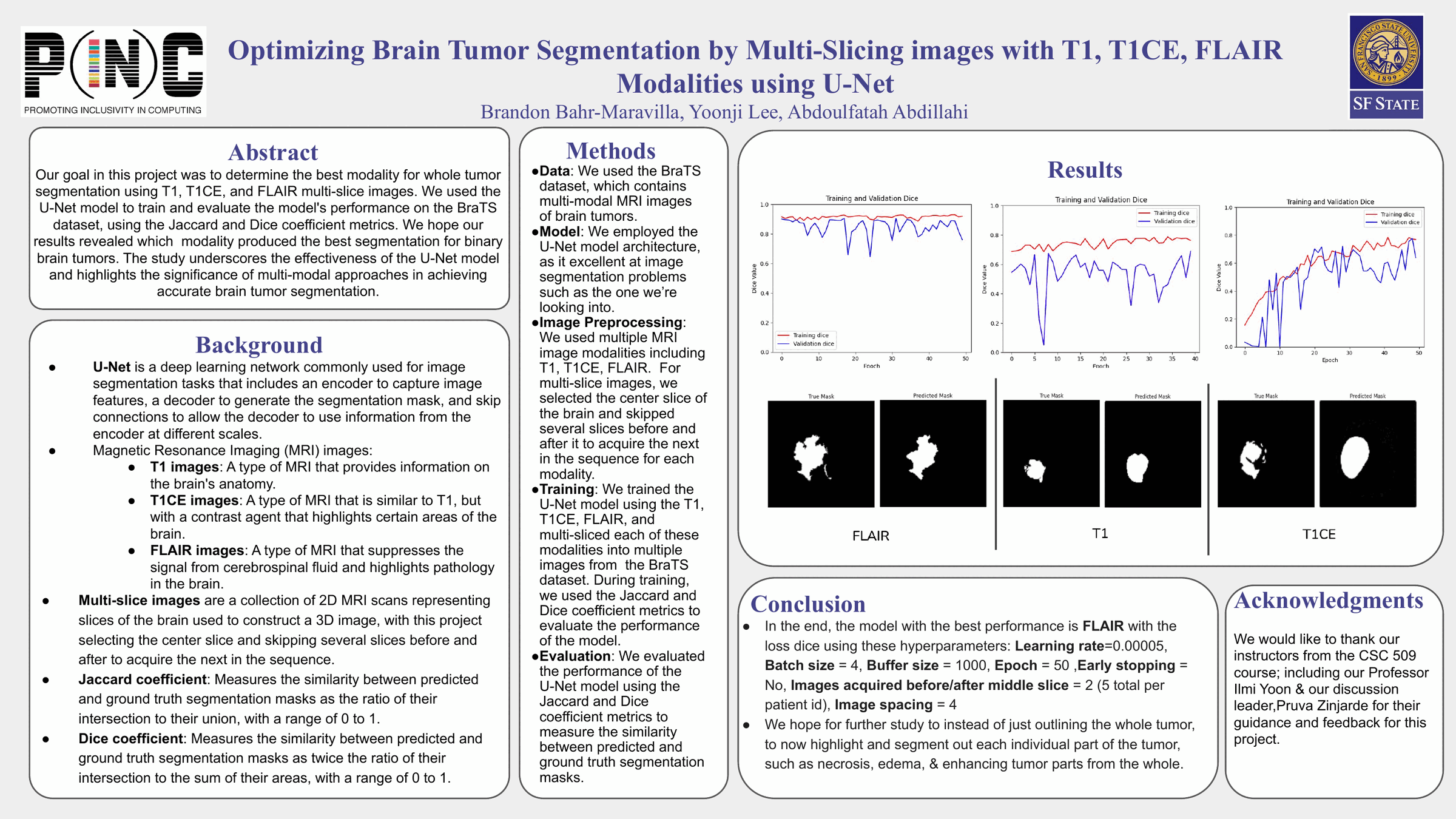
Multislice Multimodality Tumor Segmentation
COSE Conference — 2023, SFSU College of Science & Engineering
Brain tumor segmentation from multi-modal MRI scans (T1, T2, T1CE, FLAIR) using a
U-Net deep learning framework trained on the BraTS
dataset. The project evaluated the relative effectiveness of each MRI sequence for
classifying tumor subregions — enhancing tumor, non-enhancing tumor, and peritumoral
edema — to inform multi-modal fusion strategies for clinical segmentation pipelines.
My role: Designed and implemented the U-Net architecture and multi-modal preprocessing pipeline; conducted comparative modality analysis with teammates Brandon Bahr Maravilla and Yoonji Lee under Dr. Ilmi Yoon.